

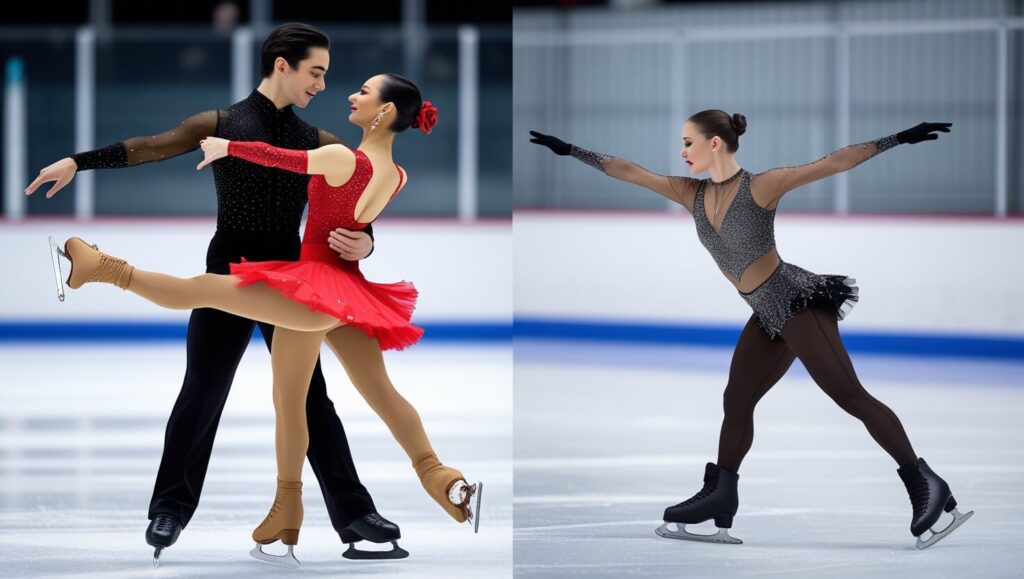
If you’ve ever watched the Winter Olympics or visited a local rink, you’ve likely seen skaters gliding gracefully across the ice. But did you know that not all ice skating styles are the same? Two popular styles often confused with each other are ice dancing and figure skating.
Whether you’re new to the world of skating or just curious about the differences, this blog post breaks it all down in a simple, easy-to-understand way. We’ll dive into what sets ice dancing apart from figure skating—from costumes and music to rules and scoring—so you’ll never mix them up again!
What is Figure Skating?
Figure skating is what most people think of when they picture competitive skating—it’s flashy, athletic, and full of jumps and spins. Skaters perform routines set to music, showcasing technical skills while telling a story on the ice.
There are several types of figure skating, including:
- Singles – One skater performs alone.
- Pairs – A male and female skater perform lifts, jumps, and synchronized movements.
- Ice Dancing – Yes, it’s technically a figure skating discipline, but with unique rules and style (more on that in a minute).
So, What is Ice Dancing Then?
Think of ice dancing as a mix between ballroom dancing and figure skating. It’s done in pairs, and the focus is more on rhythm, interpretation of the music, and footwork—not big jumps or dramatic lifts.
Ice dancing is all about grace, storytelling, and connection. It’s where musicality really takes center stage.
Imagine Fred Astaire and Ginger Rogers on ice—smooth, elegant, and perfectly in sync.
Key Differences Between Ice Dancing and Figure Skating
Now let’s break down exactly how these two styles differ. Knowing this will help you appreciate what each brings to the ice—and maybe even choose the right path if you’re thinking of trying it yourself!
1. Lifts and Jumps
This might be the most noticeable difference.
- Figure skating includes high lifts and powerful jumps like the triple axel or salchow. Skaters often soar several feet into the air!
- Ice dancing, on the other hand, has no jumps over a certain height. Lifts are closer to the ice and must follow stricter rules (no overhead lifts allowed).
2. Music Choices and Interpretation
- Ice dancers must move with the rhythm. Their choreography is tightly connected to the music’s beat, similar to ballroom dancing.
- Figure skaters have more freedom when it comes to interpreting music. The flow and expression are more open-ended and not necessarily tied to the rhythm.
For example, in ice dancing, if the music is a tango, their performance better feel like a tango! That includes posture, steps, and attitude.
3. Costume Rules
This might surprise you, but yes—the outfits matter!
- In figure skating, costumes can be more theatrical and dramatic, reflecting the skater’s individual style and story.
- In ice dancing, costumes follow stricter guidelines that match the rhythm and type of dance. No excessive sparkles or wild styles.
It’s all about competing while staying in the theme of the dance style.
4. Skating Skills and Footwork
While both styles are built on great skating skills, footwork plays a central role in ice dancing.
- Ice dancers spend much more time doing intricate steps and edge work. Their routines are full of quick turns, syncopated rhythms, and smooth transitions.
- Figure skaters also have good footwork, but the focus is often on high-flying moves and emotion-driven performance.
If you’re someone who loves music and rhythm, you might find ice dancing more appealing.
5. Scoring and Judging Criteria
Another big difference comes down to how these skaters are judged.
Figure skating routines are scored based on:
- Technical elements (jumps, spins, lifts)
- Artistic component (musical interpretation, expression)
Ice dancing scoring focuses more on:
- Timing and rhythm
- Precise patterns and steps
- Unity and connection between the partners
So even if an ice dance team doesn’t have flashy moves, they can still score high with near-perfect synchronization and storytelling.
Still Not Sure Which Is Which? Here’s a Quick Recap:
If you ever find yourself guessing, just watch for these clues:
- Are the skaters doing big jumps and dramatic overhead lifts? It’s probably figure skating.
- Are the movements smooth, rhythmic, and always performed in sync with music? You’re watching ice dancing.
- Are they focusing more on speed, height, and spins? That’s figure skating for sure.
Which One is Better?
Honestly? Neither is better—they’re just different.
Some people love the thrill and athleticism of figure skating, while others are drawn to the elegance and musicality of ice dancing. It all comes down to personal taste.
It’s kind of like comparing salsa dancing to gymnastics. Both are amazing in their own way but offer entirely different experiences.
Interested in Trying it Yourself?
If you’re thinking of stepping onto the ice yourself, here’s something to keep in mind:
- Ice dancing is a great option if you enjoy dancing, music, and working closely with a partner. It’s less about acrobatics and more about rhythm and flow.
- Figure skating might appeal to you if you’re drawn to high-flying jumps, challenging spins, and full-body athleticism.
No matter which one you choose, both require dedication, practice, and a genuine love for being on the ice.
Final Thoughts
At first glance, ice dancing and figure skating might seem similar. But once you know what to look for—the steps, the lifts, the rhythm—it becomes easy to see the difference.
Next time you watch a skating event or visit your local rink, take a closer look. Are the skaters telling a love story through dance steps to a classic waltz, or are they leaping through the air in a dramatic free skate? Now you’ll know exactly what you’re looking at!
And who knows? Maybe discovering the difference between ice dancing and figure skating will inspire you to lace up a pair of skates and give it a try.
Which style do you prefer—graceful storytelling or daring athleticism? Let us know in the comments below!