

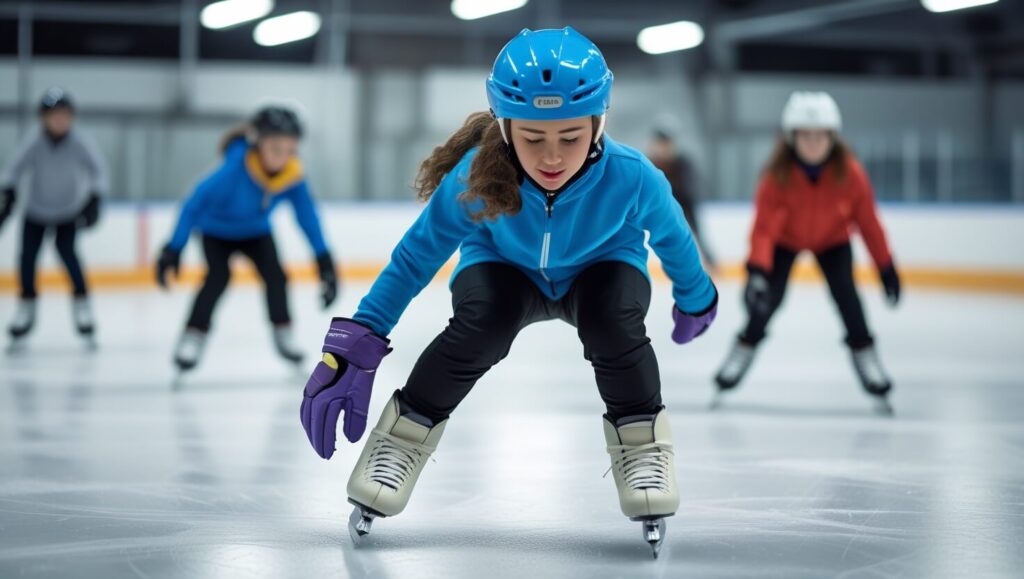
Learning how to stop on ice skates is one of the biggest challenges for beginners.
Skating is fun, but not being able to stop can quickly turn fun into fear.
In this post, we’ll break down the most common stopping techniques and a few helpful products that make it easier for beginners to build control and confidence.
Whether you’re using rental skates, figure skates, or hockey skates — you’ll find a method that fits your level.
Why Stopping is Hard for Beginners
The biggest reason stopping feels so tough is that ice offers almost no friction.
Unlike riding a bike or walking, skates don’t have brakes.
Stopping on skates is all about using your body, posture, and the edges of your blades to create friction on purpose.
It’s normal for new skaters to feel unsteady when trying to stop — but the right method changes everything.
Technique Comparison — Common Ways to Stop on Ice Skates
- The Snowplow Stop
This is usually the first stop beginners learn.
It’s simple: push your heels outward, turn your toes slightly inward, and apply pressure to the inside edges.
This slows you down gradually and safely.
Pros:
- Easy to learn.
- Doesn’t require fast reflexes or perfect balance.
Cons:
- Not great for high-speed stopping.
- Can wear out your leg muscles fast if used too long.
- The T-Stop
The T-Stop is the next step up.
One foot remains gliding straight, while the other foot is placed behind it at a 90-degree angle, forming a “T” shape.
Drag the back skate gently to create friction and slow down.
Pros:
- More control than the Snowplow Stop.
- Works well for moderate speeds.
Cons:
- Requires more balance and control.
- Poor technique can dull skate blades.
- The Hockey Stop
This is the fastest and most stylish way to stop — but also the hardest for beginners.
It involves turning your body sideways and pushing both skate blades hard against the ice to create a sharp skid that stops you instantly.
Pros:
- Very effective at high speeds.
- Lets you stop fast in tight spaces.
Cons:
- Hard to learn without falling a few times.
- Not recommended for total beginners.
Equipment Aids for Safe Stopping
If you’re nervous about falling while learning how to stop with ice skates, some equipment can help:
- Skate Trainers & Balance Aids
- Support your body as you learn the right posture for stopping.
- Let you practice safely without face-planting every time.
- Protective Gear
- Knee pads, wrist guards, and helmets take the fear out of falling.
- Confidence speeds up learning.
Choosing the Right Method for You
If you’re starting out and wondering how to stop ice skate for beginners — begin with the Snowplow Stop.
When your confidence grows, switch to the T-Stop.
If you want to skate fast and look sharp, practice the Hockey Stop (but only after the other two).
Using protective gear is smart at every stage.
Quick Recap — Matching Skater Level to Stop Method
| Skater Level | Recommended Stop | Extra Gear Suggestion |
| Total Beginner | Snowplow Stop | Balance aids + protective gear |
| Beginner / Intermediate | T-Stop | Knee pads |
| Intermediate / Advanced | Hockey Stop | None (just practice!) |
Common Questions Beginners Ask
Q: How do you stop on ice skates if you’re scared of falling? A: Start with the Snowplow Stop at walking speed and wear full protective gear. It removes the fear so you can focus on the skill.
Q: How to stop on ice skates beginners usually start with? A: Most beginners start with the Snowplow Stop because it’s the safest and easiest to control.
Q: Is there any product that helps with how to stop ice skate for beginners? A: Balance aids and protective gear help new skaters practice stopping without hard falls.
Q: Why are my rankings up but traffic is down? A: This usually signals that search intent shifted, or SERP features (like maps and local results) are eating your clicks even though your position looks fine in tools.
Conclusion
Mastering how to stop on ice skates is the most important skill for beginners.
Whether you start with the Snowplow, move on to the T-Stop, or aim for the Hockey Stop — the right method and steady practice make the difference.
Learning how to stop on ice skates beginners often struggle with can take time, but with practice and the right support, it becomes second nature.
Stay safe, go slow, and enjoy your time on the ice!